
In a recent announcement on December 5th, Amazon unveiled a significant change that will impact sellers on its platform. The introduction of a “low inventory fee” in 2024 adds a layer of complexity to the already intricate landscape of fees associated with the Fulfillment by Amazon (FBA) program. Let’s delve into the details and explore how this new fee and other adjustments could affect sellers’ strategies and bottom lines.
Understanding the Low Inventory Fee
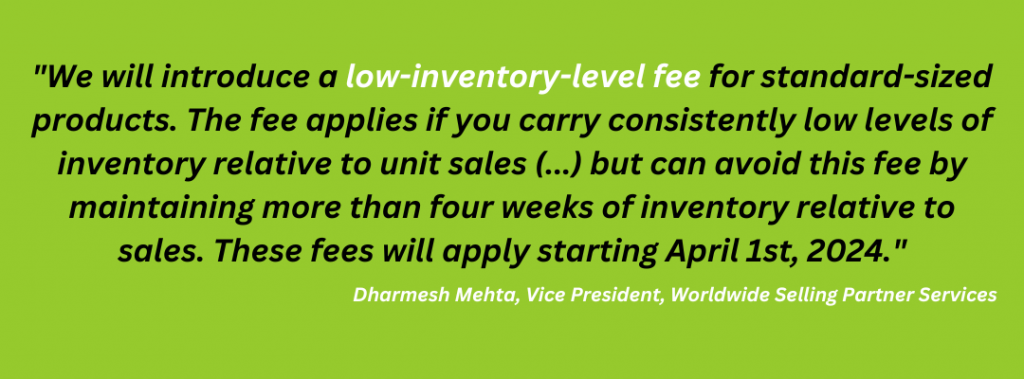
Amazon’s decision to implement a low inventory fee for standard-sized products stems from its effort to discourage sellers from maintaining consistently low inventory levels relative to unit sales. This move enhances the distribution efficiency across Amazon’s network, ensuring faster delivery times and minimizing shipping costs. Amazon announced that the fee will be triggered if sellers carry inventory below four weeks relative to their sales, starting April 1st, 2024.
Impact of FBA Decentralization
This new fee seems to be a direct consequence to Amazon CEO Andy Jassy’s decision to decentralize FBA. The regional rollout of eight self-sufficient fulfillment networks aims to expedite delivery times. However, sellers now face the financial repercussions of this restructuring, as they will be charged for excessive or insufficient inventory levels.
Inbound Placement Service Fee
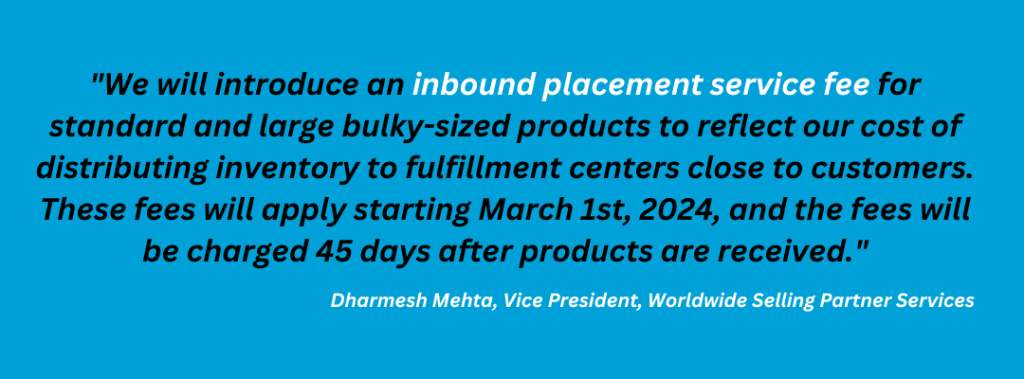
Another change introduced by Amazon involves a new “inbound placement service fee.” This fee will be implemented next year and will cover Amazon’s inventory distribution costs to the eight regional warehouses. The fees, averaging $0.27 per unit for standard-sized products and $1.58 per unit for Large Bulky-sized products, present an additional cost for sellers to consider.
Additional Changes and Fee Adjustments to Reduce Impact
To mitigate the impact of these changes, sellers can ship inventory to multiple Amazon warehouses themselves, potentially reducing inbound placement service fees. However, this approach has challenges, including increased shipping costs and logistical complexities.
Beyond the low inventory fee and the inbound placement service fee, Amazon is implementing other changes, such as reducing referral fees for apparel products and offering fulfillment fee discounts for eligible products in the Ships in Product Packaging (SIPP) program. Additionally, a broader application of “returns processing fees” is set to begin on June 1st, 2024, impacting products with high return rates.
As Amazon continues to evolve its FBA program, sellers must adapt to the changing fee structure and operational dynamics. While the new fee aims to provide more transparency and control over fulfillment costs, it also poses challenges for sellers striving to balance inventory levels and avoid additional charges. Staying informed about these changes, leveraging Amazon’s provided metrics, and considering alternative fulfillment strategies will be crucial for sellers navigating the evolving landscape of fees and services on the platform.
If you want to read the announcement in full, you can do it here.